Awards › Guides › Nutrition basics
Nutrition basics
Macronutrients Explained: Protein, Carbohydrate, Fat and Where Calories Come From
Every calorie in your diary comes from one of four sources: protein and carbohydrate at about 4 calories per gram, fat at about 9, and alcohol at about 7. Understanding what each does, and the ranges most adults aim for, makes the macro screen in any food tracker far more useful.
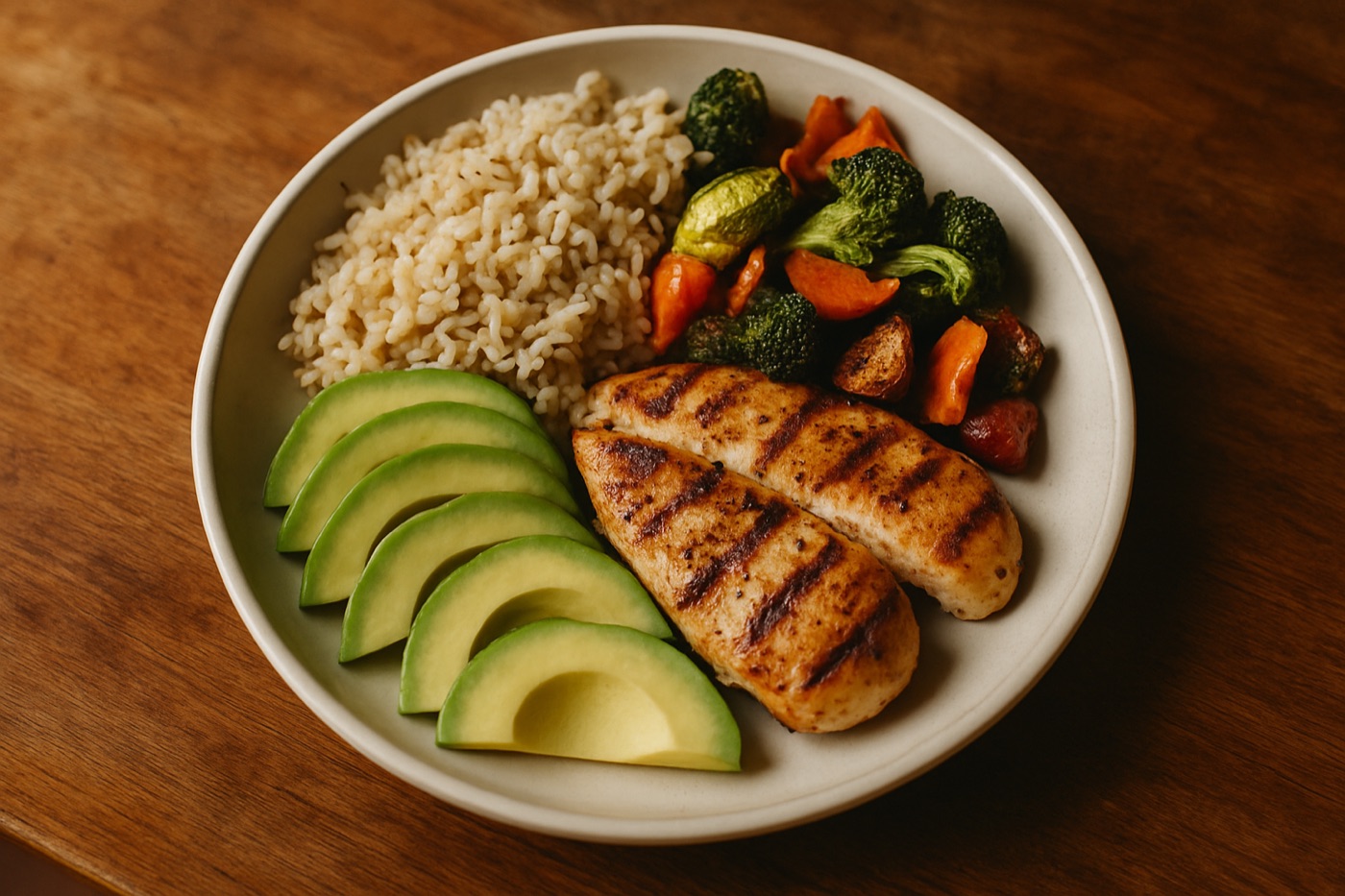
A food tracker shows calories as one number, but every calorie comes from somewhere. The macro screen, usually a ring or a bar showing protein, carbohydrate and fat, tells you where. Once you know what each macronutrient does, that screen stops being decoration and starts being useful.
The energy in each gram
| Macronutrient | Calories per gram (approx.) | Main jobs |
|---|---|---|
| Protein | 4 | Building and repairing tissue, enzymes, keeping you full |
| Carbohydrate | 4 | The body’s preferred fuel, especially for the brain and hard exercise |
| Fat | 9 | Energy storage, hormones, absorbing vitamins A, D, E and K |
| Alcohol | 7 | Not a nutrient, but it supplies energy |
Fat has more than twice the energy per gram of protein or carbohydrate, which is why oily and fatty foods carry so many calories in a small portion.
Protein
Protein supplies the amino acids your body uses to build and repair muscle, skin, enzymes and much else. It is also the most filling macronutrient for many people, which is one reason higher-protein diets can make a calorie target easier to stick to.
- How much: the recommended dietary allowance for adults is 0.8 g per kilogram of body weight per day. People who do regular strength training often aim for 1.2 to 2.0 g per kilogram.
- Where it comes from: meat, fish, eggs, dairy, tofu and tempeh, beans and lentils, and smaller amounts in grains and nuts.
- Tracking tip: spreading protein across meals, rather than saving it for dinner, makes higher targets easier to reach.
Carbohydrate
Carbohydrates include sugars, starches and fiber. They are the body’s main fuel, especially for the brain and for high-intensity exercise.
- Fiber is a carbohydrate the body largely does not digest. It supports digestion and fullness. A common guide is about 14 g of fiber per 1,000 calories; most adults fall well short.
- Added sugars are sugars added during processing or cooking. The US Dietary Guidelines suggest keeping them below 10% of daily calories.
- Net carbs, total carbohydrate minus fiber (and often sugar alcohols), is the figure people on low-carb diets usually track.
Fat
Fat stores energy, forms part of every cell, helps make hormones and lets you absorb the fat-soluble vitamins A, D, E and K.
- Unsaturated fats, from olive oil, nuts, seeds, avocado and oily fish, are generally the ones to favour.
- Saturated fat, from fatty meat, butter, cheese and coconut oil, is best kept below 10% of daily calories, per the US Dietary Guidelines.
- Trans fats from partially hydrogenated oils are best avoided altogether.
Acceptable ranges
For adults, the US Dietary Reference Intakes set Acceptable Macronutrient Distribution Ranges:
| Macronutrient | Share of daily calories |
|---|---|
| Carbohydrate | 45–65% |
| Fat | 20–35% |
| Protein | 10–35% |
These are wide on purpose. A runner, a lifter and someone eating low-carb can all eat healthily at very different points within them.
Reading your tracker’s macro screen
- Look at grams as well as percentages. Percentages change when total calories change; grams of protein are often the more useful target.
- Judge the week, not the day. One pasta night does not ruin a balance.
- Change one thing at a time. If protein is low, add it to breakfast first.
- Do not chase a perfect split. The ranges are broad; consistency matters more than precision.
The bottom line
Protein and carbohydrate give about 4 calories per gram, fat about 9 and alcohol about 7. Aim for protein at every meal, plenty of fiber, mostly unsaturated fats and limited added sugar, and use your tracker’s macro view to spot patterns over a week rather than to police a single day.
Quick answers
How many calories are in a gram of protein, carbs and fat?
About 4 calories per gram of protein, 4 per gram of carbohydrate and 9 per gram of fat. Alcohol provides about 7 calories per gram.
What percentage of my calories should come from each macronutrient?
The US Dietary Reference Intakes give acceptable ranges for adults of 45 to 65% of calories from carbohydrate, 20 to 35% from fat and 10 to 35% from protein. Within those ranges, the right split depends on your preferences, activity and health.
How much protein do I need a day?
The recommended dietary allowance for adults is 0.8 g per kilogram of body weight per day. People who do regular strength training often aim higher, commonly 1.2 to 2.0 g per kilogram.
Keep reading
Micronutrients Worth Watching: The Vitamins and Minerals Many Diets Miss
Nutrition basics
Energy Balance Basics: How Calories In and Calories Out Really Work
Nutrition basics
How to Choose a Food Tracking App You Will Actually Keep Using
Getting started
How to Start a Food Diary: Your First Fourteen Days
Getting started