Awards › Guides › For your situation
For your situation
Food Tracking for Strength Training: Protein, Surpluses and Cuts
For people who lift, food tracking is mostly about two numbers: protein, and the size of your surplus or deficit. Aim for roughly 1.6 g of protein per kilogram a day spread across meals, keep surpluses and deficits modest, and judge changes on a four-week weight trend.
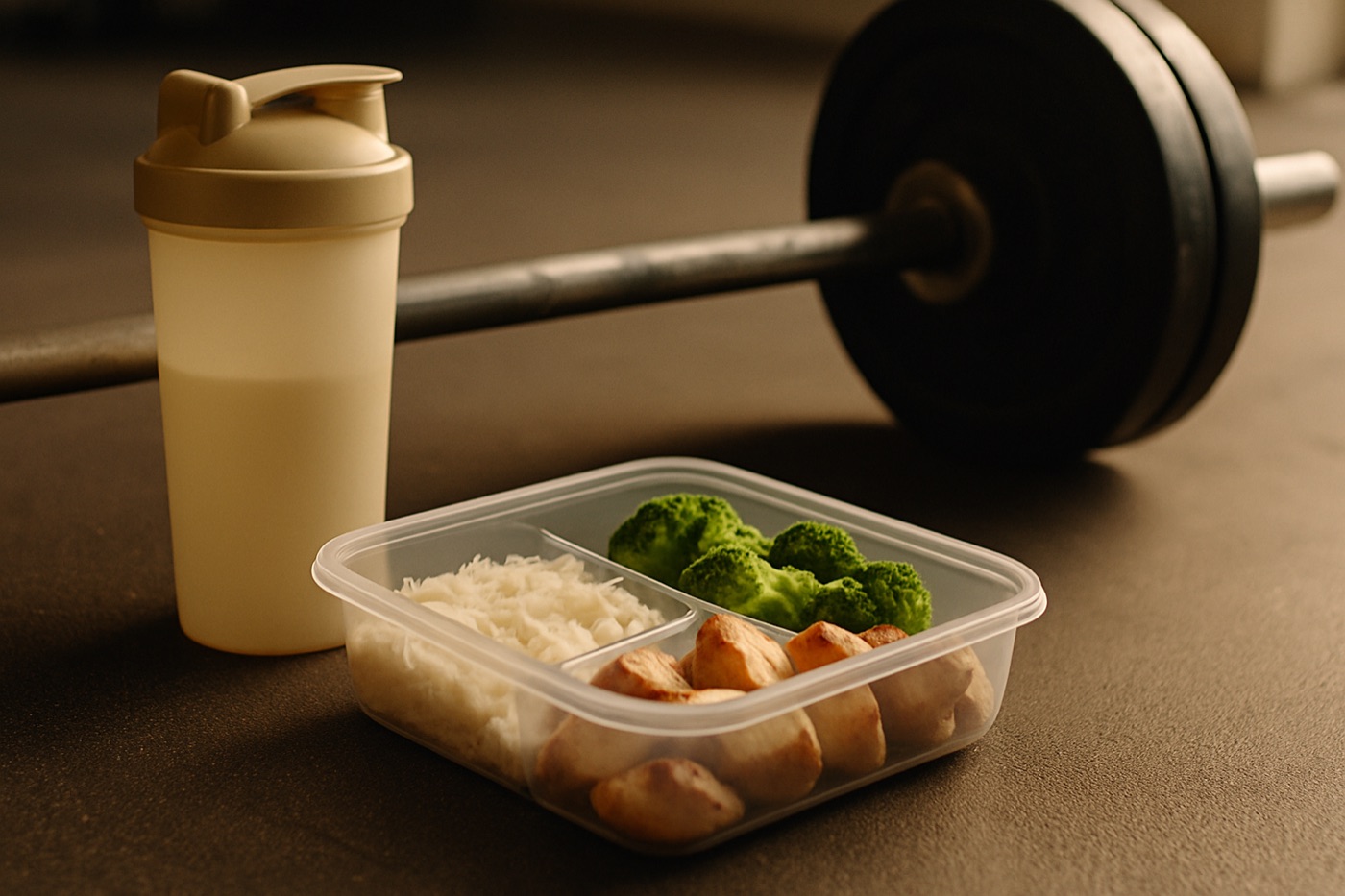
If you lift weights, food is half of your training. The good news is that you do not need to track everything perfectly. Two numbers carry most of the weight: how much protein you eat, and how far your calories are above or below maintenance.
Protein first
Protein supplies the amino acids your muscles use to repair and grow after training.
- How much: a widely cited 2018 meta-analysis by Morton and colleagues found the benefit of extra protein for muscle gain levelled off at around 1.6 g per kilogram of body weight per day, with an upper range near 2.2 g/kg. Many lifters aim for 1.6 to 2.2 g/kg.
- How to spread it: three or four meals with a good serving of protein each, roughly 0.3 to 0.4 g/kg per meal, is a practical pattern.
- During a cut: keeping protein high helps protect muscle while you lose fat.
| Body weight | 1.6 g/kg | 2.2 g/kg |
|---|---|---|
| 60 kg | 96 g | 132 g |
| 75 kg | 120 g | 165 g |
| 90 kg | 144 g | 198 g |
Find maintenance first
Before you bulk or cut, spend two to three weeks eating normally, logging carefully and weighing yourself several mornings a week. If your weekly average weight is stable, your average intake is close to maintenance. Equations give a starting point; your own trend gives the answer. Our guide to energy balance explains why.
Bulking: keep the surplus small
Muscle grows slowly. A large surplus mostly adds fat. A common approach is a surplus of a few hundred calories a day, aiming to gain roughly 0.25 to 0.5% of body weight per month if you are experienced, and a little faster as a beginner. If your weight climbs faster than that, trim the surplus.
Cutting: keep the deficit moderate
A moderate deficit, often aiming to lose around 0.5 to 1% of body weight per week, with high protein and continued heavy training, gives the best chance of keeping muscle. Faster cuts tend to cost more muscle and performance.
What to track, and what not to worry about
- Track closely: total calories, protein, body weight (weekly average), and training performance.
- Track loosely: carbohydrate and fat split. Within sensible ranges, it matters much less than total calories and protein. Many lifters prefer more carbohydrate around hard sessions.
- Do not obsess over: meal timing to the minute, or single-day weight changes.
Making it sustainable
- Save your regular meals and post-training snacks as one-tap entries.
- Batch-cook protein for the week and log it per container.
- Weigh dense foods, such as oils, nut butters, granola and cheese, for a fortnight to calibrate.
- Review weekly: weight trend, average protein, and how training went.
The bottom line
Hit your protein, keep surpluses and deficits modest, and let a four-week trend, not a single weigh-in, tell you whether to change course.
Quick answers
How much protein do I need to build muscle?
A widely cited 2018 meta-analysis found that the benefit of protein for muscle gain levelled off at around 1.6 g per kilogram of body weight per day, with some people benefiting from up to about 2.2 g. Many lifters aim for 1.6 to 2.2 g per kilogram.
How big should a bulking surplus be?
Modest. A surplus of a few hundred calories a day, enough to gain roughly 0.25 to 0.5% of body weight a month for experienced lifters and a little more for beginners, limits fat gain while supporting muscle growth.
Should I track food every day when lifting?
During a focused bulk or cut, yes, because the margins are small. Once you know your maintenance intake and your regular meals, many lifters track a few days a week or in four-week blocks.
Keep reading
Food Tracking for Vegetarians and Vegans: What to Watch Beyond Calories
For your situation
Food Tracking With Diabetes: Carb Counting Basics and Working With Your Care Team
For your situation
How to Choose a Food Tracking App You Will Actually Keep Using
Getting started
How to Start a Food Diary: Your First Fourteen Days
Getting started