Awards › Guides › Logging skills
Logging skills
How to Log Home-Cooked Meals Without Spending All Evening on It
Home cooking is the hardest thing to log and the most worth getting right. Enter each regular recipe once, weigh the finished pot, and log your bowl as a share of it. After that, a home-cooked dinner takes seconds.
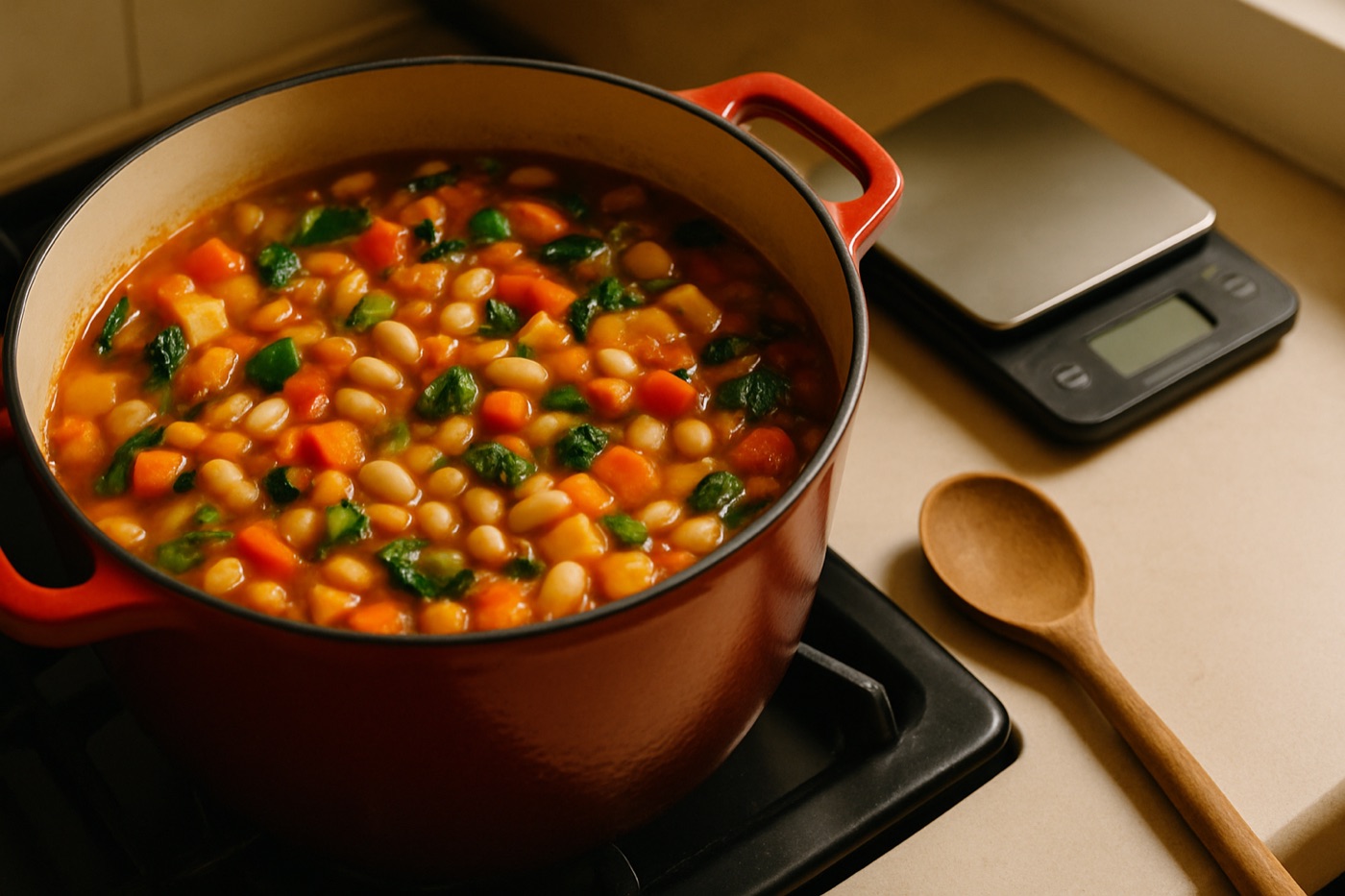
Restaurant meals get the attention, but for most people the largest share of the week’s food is cooked at home. Those meals are also where tracking quietly fails: a stew has eleven ingredients, nobody wants to enter them every night, and so dinner becomes the gap in an otherwise complete diary. The fix is to do the work once.
The one-time method
1. Enter the recipe with raw weights. List every ingredient as it went into the pot: the raw meat or beans, the vegetables, the stock, and especially the fats. Oil, butter, cream and cheese are where most of a recipe’s calories hide, and they are the ingredients people leave out most.
2. Weigh the finished dish. Put the empty pot on a scale and note its weight before you cook, or weigh the finished food in a bowl. The finished weight is the key number, because water cooks off and every batch is slightly different.
3. Log your portion by weight. If the whole pot of chilli weighs 2,400 g and you serve yourself 400 g, you ate one-sixth of the recipe. Most apps let you log a recipe either by servings or by grams; grams are more accurate.
4. Save it. Next time you cook the same dish, log the saved recipe and adjust only if you changed something significant.
A worked example
| Ingredient (raw) | Amount | Approx. kcal |
|---|---|---|
| Lean minced beef | 500 g | 850 |
| Olive oil | 2 tbsp | 240 |
| Onion | 150 g | 60 |
| Kidney beans, drained | 400 g | 400 |
| Chopped tomatoes | 800 g | 170 |
| Peppers | 200 g | 50 |
| Spices and stock | — | 20 |
| Total | finished pot 2,400 g | about 1,790 |
A 400 g bowl is one-sixth of the pot: about 300 calories. Without the two tablespoons of oil, the estimate would have been 40 calories a bowl too low every time you ate it.
Raw and cooked weights
Foods change weight as they cook, mostly by losing or absorbing water:
| Food | Raw to cooked |
|---|---|
| Rice | Roughly doubles to triples in weight |
| Pasta | Roughly doubles |
| Lean meat | Loses roughly a quarter |
| Leafy greens | Shrink dramatically |
Calories do not change much in cooking; the weight does. So 100 g of cooked rice has far fewer calories than 100 g of dry rice. Always match the entry to the state you weighed.
Shortcuts for busy weeks
- Batch-cook and portion. Divide a batch into equal containers and log one container as one serving.
- Keep a family-meal library. Five or six regular dinners cover most weeks.
- Use templates. A basic stir-fry with a different protein is the same recipe with one ingredient swapped.
- Log oil separately. If you cook “by eye”, measure the oil and log it on its own, then log the rest with less precision.
Meals other people cook
You cannot weigh your partner’s lasagne without seeming odd. Estimate the components instead: the pasta, the meat sauce, the cheese layer. Choose a close generic dish if one exists, or use a photo entry if your app offers one. Add a little extra for oil and butter, because home cooks use more than recipes say.
When precision is not worth it
If you are eating mostly vegetables, lean protein and whole grains, small errors make little difference. Spend your care on the dense ingredients and accept estimates for the rest.
The bottom line
Do each recipe’s work once, weigh the pot, log your share by weight, and save it. Home cooking then becomes the easiest meal of the day to track.
Quick answers
How do I log a recipe in a food tracker?
Enter every ingredient with its raw weight, including oil and sauces, then tell the app how many portions the recipe makes, or weigh the finished dish and log your portion by weight. Save the recipe so next time it is one entry.
Should I weigh food raw or cooked?
Either works if you are consistent and choose a matching entry. For recipes, raw ingredient weights are most reliable; for your portion, weighing the cooked dish and logging a share of the total is easiest.
How do I log a meal someone else cooked?
Estimate the main components separately, such as the meat, the starch and the vegetables, and add a little for oil or butter. A photo entry or a close generic dish is fine; consistency matters more than precision.